 THE
MINERAL ELPIDITE
THE
MINERAL ELPIDITE
- Chemistry: Na2ZrSi6O15 - 3H2O, Hydrated Sodium Zirconium Silicate.
- Class: Silicates
- Subclass: Phyllosilicates
- Uses: Only as mineral specimens.
Specimens
Elpidite is another in the long list of unusual mineral that come from agpaitic pegmatite rocks.
Agpaitic pegmatite intrusions are unusual igneous rocks that are high in alkaline metals (such as sodium) and poor in silica.
These intrusions also contain a large number of unusual elements such as zirconium.
Elpidite was first discovered at
PHYSICAL CHARACTERISTICS:
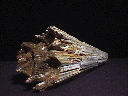
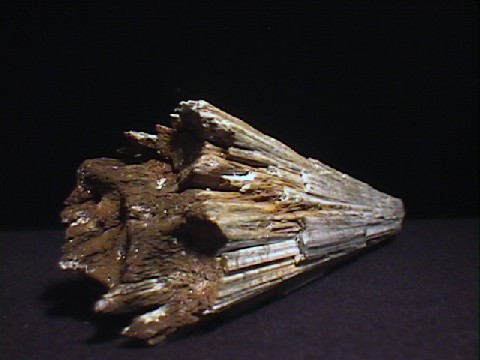
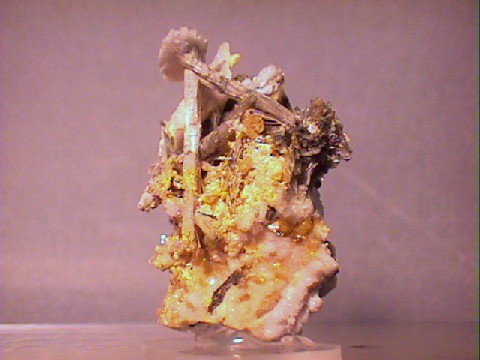
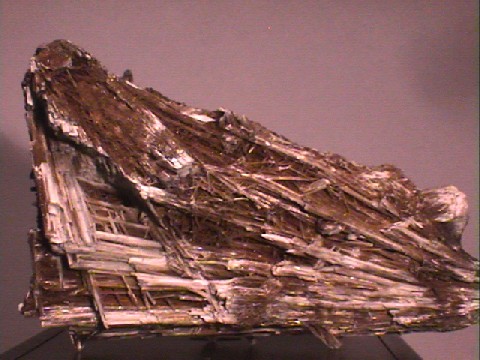
- Color is colorless, white, gray, tan to brick-red.
- Luster is vitreous, earthy, dull or silky.
- Transparency: Crystals are typically opaque to translucent or rarely transparent.
- Crystal System is orthorhombic.
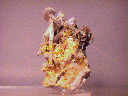
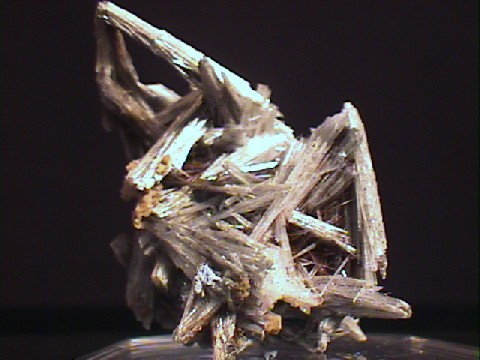
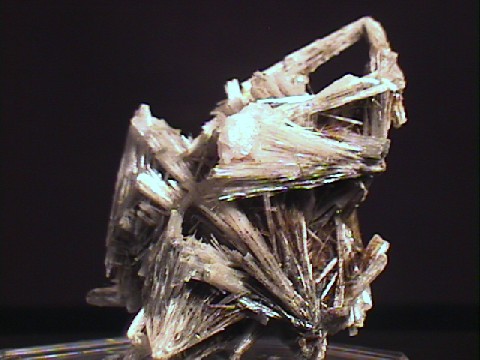
- Crystal Habits include prismatic or acicular crystals often forming sprays or stibnite-like aggregates. Individual crystals can have sharp pointed terminations
- Cleavage is good in two directions (prismatic).
- Fracture is splintery or uneven.
- Hardness is variable at 5 - 7.
- Specific Gravity is approximately 2.5 to 2.6
- Streak is white.
- Other Characteristics: some specimens
fluoresce green or yellow-green under shortwave UV light. - Associated Minerals are calcite, albite, bastnasite, apatite, rutile, pyrochlore, siderite, epididymite, chlorites, natrolite and aegirine.
- Notable Occurrences include the type locality at
Narsarsuk , Julianehaab district, Greenland and perhaps the best source for collection specimens is Mont Saint-Hilaire, Quebec, Canada. Also found atLangesundfjord , Norway. - Best Field Indicators: Crystal habit, color, cleavage, associations and localities.
 Amethyst Galleries' Mineral Gallery MINERALS |
$ 45.00
elp-1 ($ 45.00)
$ 75.00
elp-3 ($ 75.00)
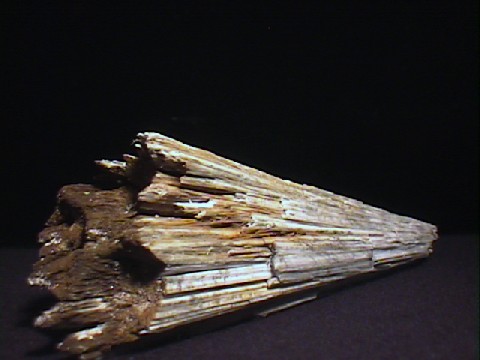
$ 68.00
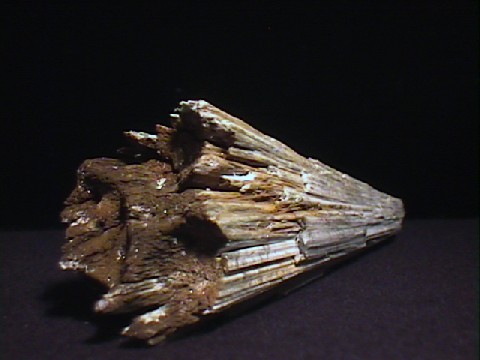
elp-4 ($ 68.00)
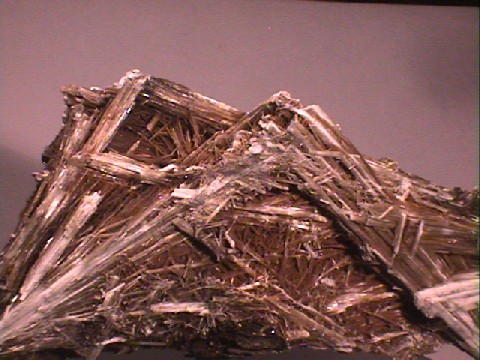
$ 170.00
elp-2 ($170.00)