 |
As well as the Selenides, the Tellurides, the Antimonides, the Arsenides and the Sulfosalts. | 
|
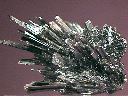
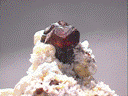
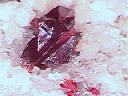
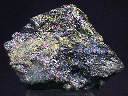
The Sulfide Class minerals comprise an economically important class of minerals. Most major ores of important metals such as copper, lead and silver are sulfides. Strong generalities exist in this class. The majority of sulfides are metallic, opaque, generally sectile, soft to average in hardness and they have high densities, black or dark-colored streaks, and an igneous origin. But, there are a few vitreous and transparent members such as realgar, cinnabar and orpiment that tend to break the mold, so to speak.
Minerals belonging to the selenide, telluride, antimonide and arsenide subclasses have very similar properties to the more common sulfides and are thus included here. The whole or partial supplanting of sulfur by either selenium, tellurium, antimony, arsenic or bismuth is possible because these elements have similar sizes, charges and ionic strengths. Only minerals in the sulfide class that have no appreciable sulfur are included in these subclasses. If there is enough sulfur in the mineral to be named in the formula then it is treated as a normal sulfide.
There is an exception in the case of the Sulfosalts. This is a large segment of the sulfide class whose difference from the other sulfides lies in the position of the semi-metal ions. In most ordinary sulfides that contain a semi-metal such as antimony, arsenic or bismuth, they substitute in the sulfur positions, but in sulfosalts they substitute for the metal ions and bond with the sulfurs. The term sulfosalts came from a theory that these minerals were the salts of acids in which the oxygens are replaced by sulfurs. Such as Na2SO4 is the salt of H2SO4 or sulfuric acid; then enargite, Cu3AsS4. would be the salt of the hypothetical acid H6AsS4. This theory is not considered credible now but the name "sulfosalt" still persists.
These are some of the members of the Sulfide Class:
The Standard Sulfides:
- Acanthite/Argentite (Silver Sulfide)
Aguilarite (Silver Selenium Sulfide)Alabandite (Manganese Sulfide)Argentopentlandite (Silver Iron Nickel Sulfide)Argentopyrite (Silver Iron Sulfide)- Argyrodite (Silver Germanium Sulfide)
- Arsenopyrite (Iron Arsenic Sulfide)
- Bismuthinite (Bismuth Sulfide)
- Bornite (Copper Iron Sulfide)
Carrollite (Copper Cobalt Nickel Sulfide)- Chalcocite (Copper Sulfide)
- Chalcopyrite (Copper Iron Sulfide)
- Cinnabar (Mercury Sulfide)
- Cobaltite (Cobalt Arsenic Sulfide)
- Covellite (Copper Sulfide)
- Cubanite (Copper Iron Sulfide)
- Digenite (Copper Sulfide)
Famatinite (Copper Antimony Sulfide)- Galena (Lead Sulfide)
Germanite (Copper Germanium Gallium Iron Zinc Arsenic Sulfide)- Gersdorffite (Nickel Arsenic Sulfide)
Glaucodot (Copper Iron Arsenic Sulfide)- Greenockite (Cadmium Sulfide)
Hauchecornite (Nickel Bismuth Antimony Sulfide)Hauerite (Manganese Sulfide)Jalpaite (Silver Copper Sulfide)- Kermesite (Antimony Oxysulfide)
Laurite (Ruthenium Sulfide)Lautite (Copper Arsenic Sulfide)- Linnaeite (Cobalt Sulfide)
- Marcasite (Iron Sulfide)
Metacinnabar (Mercury Sulfide)- Millerite (Nickel Sulfide)
- Molybdenite (Molybdenum Sulfide)
- Orpiment (Arsenic Sulfide)
Patronite (Vanadium Sulfide)- Pentlandite (Iron Nickel Sulfide)
Polydymite (Nickel Sulfide)- Pyrite (Iron Sulfide)
- Pyrrhotite (Iron Sulfide)
- Realgar (Arsenic Sulfide)
- Rheniite (Rhenium Sulfide)
Schollhornite (Hydrated Sodium Chromium Sulfide)Siegenite (Cobalt Nickel Sulfide)- Sphalerite (Zinc Iron Sulfide)
Stannite (Copper Iron Tin Sulfide)Sternbergite (Silver Iron Sulfide)- Stibnite (Antimony Sulfide)
Stromeyerite (Silver Copper Sulfide)Teallite (Lead Tin Sulfide)Tetradymite (Bismuth Tellurium Sulfide)Tungstenite (Tungsten Sulfide)- Ullmannite (Nickel Antimony Sulfide)
- Wurtzite (Zinc Iron Sulfide)
Subclass: Sulfosalts
Aikinite (Lead Copper Bismuth Sulfide)Andorite (Silver Lead Antimony Sulfide)- Baumhauerite (Lead Arsenic Sulfide)
- Berthierite (Iron Antimony Sulfide)
- Boulangerite (Lead Antimony Sulfide)
- Bournonite (Lead Copper Antimony Sulfide)
Chalcostibite (Copper Antimony Sulfide)- Cylindrite (Iron Lead Tin Antimony Sulfide)
Dufrenoysite (Lead Arsenic Sulfide)- Emplectite (Copper Bismuth Sulfide)
- Enargite (Copper Arsenic Sulfide)
- Franckeite (Lead Tin Iron Antimony Sulfide)
Freieslebenite (Silver Lead Antimony Sulfide)Geocronite (Lead Antimony Arsenic Sulfide)- Gratonite (Lead Arsenic Sulfide)
Hutchinsonite (Thallium Lead Arsenic Sulfide)- Jamesonite (Lead Iron Antimony Sulfide)
- Jordanite (Lead Thallium Arsenic Antimony Sulfide)
Matildite (Silver Bismuth Sulfide)- Meneghinite (Copper Lead Antimony Sulfide)
- Miargyrite (Silver Antimony Sulfide)
Owyheeite (Silver Lead Antimony Sulfide)- Polybasite (Silver Copper Antimony Sulfide)
- Proustite (Silver Arsenic Sulfide)
- Pyrargyrite (Silver Antimony Sulfide)
- Sartorite (Lead Arsenic Sulfide)
Schapbachite (Silver Bismuth Sulfide)- Semseyite (Lead Antimony Sulfide)
Smithite (Silver Arsenic Sulfide)- Stephanite (Silver Antimony Sulfide)
- Tennantite (Copper Arsenic Sulfide)
- Tetrahedrite (Copper Iron Antimony Sulfide)
Wittichenite (Copper Bismuth Sulfide)Wittite (Lead Bismuth Selenide Sulfide)Xanthoconite (Silver Arsenic Sulfide)- Zinkenite (Lead Antimony Sulfide)
Subclass: Selenides
Berzelianite (Copper Selenide)- Clausthalite (Lead Selenide)
Eucairite (Silver Copper Selenide)Klockmannite (Copper Selenide)Tiemannite (Mercury Selenide)Umangite (Copper Selenide)
Subclass: Tellurides
- Altaite (Lead Telluride)
- Calaverite (Gold Telluride)
Coloradoite (Mercury Telluride)Empressite (Silver Telluride)- Hessite (Silver Telluride)
Kostovite (Copper Gold Telluride)Krennerite (Silver Gold Telluride)Melonite (Nickel Telluride)- Nagyagite (Gold Lead Antimony Iron Telluride Sulfide)
Petzite (Silver Gold Telluride)Rickardite (Copper Telluride)- Sylvanite (Silver Gold Telluride)
Subclass: Antimonides
Aurostibite (Gold Antimonide)Breithauptite (Nickel Antimonide)- Dyscrasite (Silver Antimonide)
Subclass: Arsenides
- Domeykite (Copper Arsenide)
- Lollingite (Iron Arsenide)
Maucherite (Nickel Arsenide)- Nickeline (Nickel Arsenide)
Nickel-skutterudite (chloanthite) (Nickel Arsenide)- Rammelsbergite (Nickel Arsenide)
- Safflorite (Cobalt Iron Arsenide)
- Skutterudite (Cobalt Arsenide)
Smaltite (Cobalt Nickel Arsenide)- Sperrylite (Platinum Arsenide)
These minerals are sometimes thought of as alloys of metals with semi-metals and placed in the Elements Class.
 Amethyst Galleries' Mineral Gallery MINERALS |