 THE MINERAL BEUDANTITE
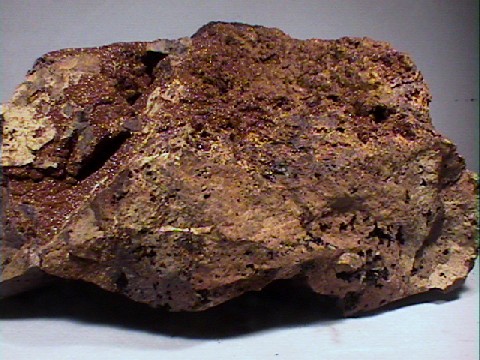
- Chemistry: PbFe3AsO4SO4(OH)6, Lead Iron Arsenate Sulfate Hydroxide.
- Class: Sulfates; although sometimes classified as a Phosphate.
- Group: Beudantite
- Uses: As a very minor source of lead and as mineral specimens.
Specimens
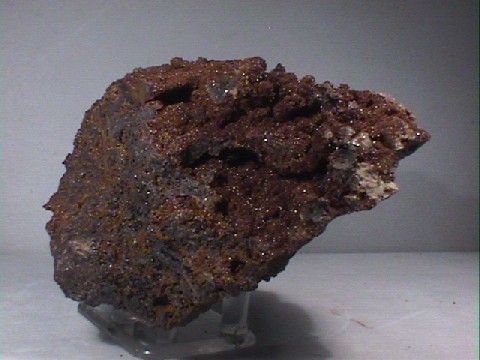
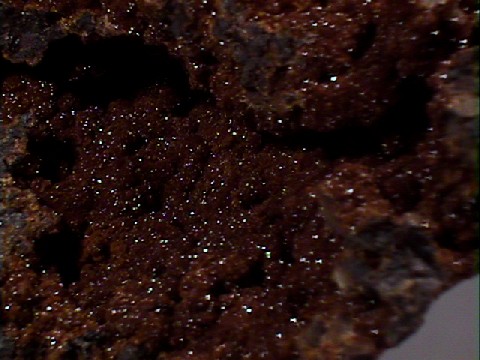
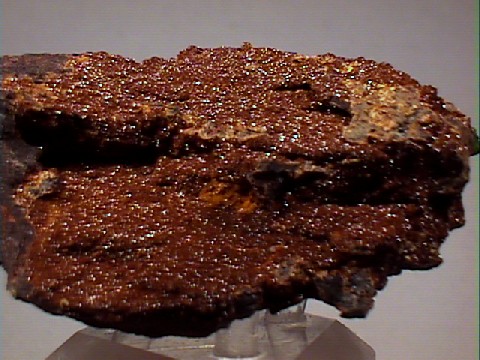
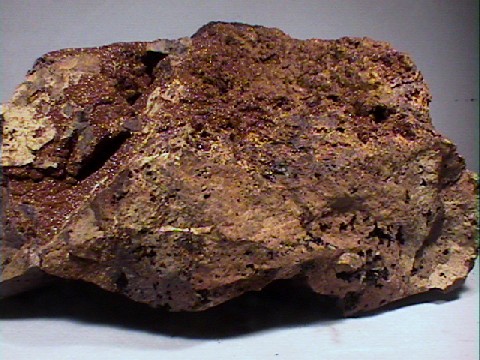
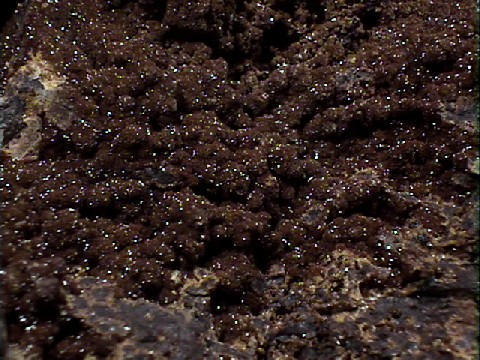
Beudantite, which is named for the French mineralogist Francois S. Beudant, is at times a very attractive mineral. It can be beautifully colored although often too dark, appearing black. It has a nice high luster due to its lead content. It is often associated with other rare secondary minerals that are found in the oxidation zone of ore deposits. Often these assorted mineral specimens can be quite interesting and a bonus to the collector who likes lots of different minerals on one specimen (more for the money, so to speak).
Beudantite lends its name to a group of sulfate-arsenates and sulfate-phosphates called the Beudantite Group.
These minerals are all trigonal, contain a sulfate ion group and have six hydroxides.
The general formula of this group is AB
3{AsO4
and/or PO4}SO
4(OH)6.
The A cation can be either calcium, barium, cerium, lead, strontium and/or hydrogen.
The B cation can be either iron, aluminum and/or gallium.
These are the members of the Beudantite Group:
PHYSICAL CHARACTERISTICS:
- Color is green, dark green, yellow-green, orange-brown, brown or black.
- Luster is vitreous, adamantine to greasy.
- Transparency: Specimens are transparent to translucent.
- Crystal System is trigonal: bar 3
- Crystal Habits include blocky rhombohedrons, sometimes pseudo-cubic, and platy to tabular crystals. also as druses, crusts and earthy masses.
- Cleavage is perfect in one direction (basal), but not usually seen.
- Fracture is conchoidal.
- Hardness is 4.
- Specific Gravity is approximately 4.3 - 4.5 (heavy for non-metallic minerals).
- Streak is greenish yellow.
- Associated Minerals include mimetite,
jarosite,
conichalcite,
anglesite,
galena,
sphalerite,
arsenopyrite,
pyrite,
pyrrhotite,
descloizite,
aegirine,
hemimorphite,
microcline,
muscovite,
arthurite,
tetranatrolite and natrolite. - Notable Occurrences include
Tsumeb , Namibia; Mont Saint-Hilaire, Quebec, Canada; several mines in Arizona, USA;laurion , Greece and Australia. - Best Field Indicators are crystal habit, density, color, streak, luster and hardness.
 Amethyst Galleries' Mineral Gallery MINERALS |
$ 55.00
beu-1 ($ 55.00)
$ 30.00
beu-2 ($ 30.00)
$ 75.00
beu-3 ($ 75.00)
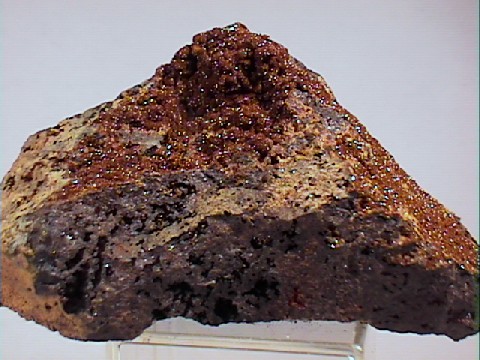
$ 25.00
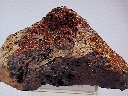
beu-4 ($ 25.00)