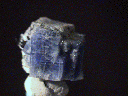
 THE MINERAL CARLETONITE
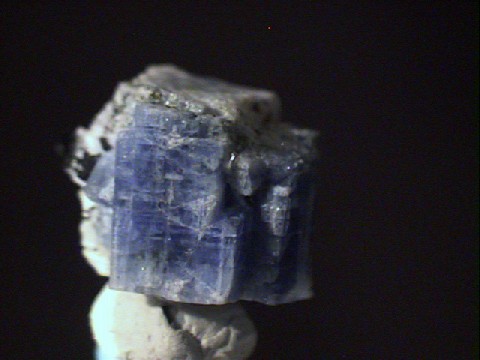
- Chemistry: KNa4Ca4(CO3)4Si8O18 (F, OH) - H2O, Hydrated Potassium Sodium Calcium Carbonate Silicate Fluoride Hydroxide.
- Class: Silicates
- Subclass: Phyllosilicates
- Group: Apophyllite
- Uses: Only as mineral specimens.
Specimens
Carletonite is structurally interesting as well as beautiful. Like any member of the Phyllosilicates Subclass, carletonite's structure is layered with alternating silicate sheets and the potassium, sodium and calcium layers. Unlike other phyllosilicates, carletonite's silicate sheets are composed of interconnected four and eight-member rings. The sheets can be thought of as being like chicken wire with alternating octagon and square shaped holes. Both octagons and squares have a four fold symmetry and this is what gives carletonite its tetragonal symmetry; 4/m 2/m 2/m. Only carletonite and other members of the Apophyllite Group have this unique interconnected four and eight-member ring structure.
PHYSICAL CHARACTERISTICS:
- Color is blue, white, colorless or pink. Color zoning is common.
- Luster is vitreous to dull.
- Transparency: Crystals are translucent to less commonly transparent.
- Crystal System is tetragonal; 4/m 2/m 2/m
- Crystal Habits include prisms truncated with a pinacoid termination. The prisms are predominantly four sided but may display small secondary faces giving a slight octagonal cross-section. Phantoms are seen in some transparent crystals.
- Cleavage is perfect in one direction (basal) and fair in four directions (pyramidal).
- Fracture is conchoidal.
- Hardness is 4.5 - 5.
- Specific Gravity is approximately 2.45 (slightly lighter than most translucent minerals)
- Streak is white.
- Other Characteristics: Prism faces are striated lengthwise and dark blue crystals show strong pleochroism.
- Associated Minerals include
rasvumite ,tugtupite , aegirine,natrophosphate ,sidorenkite , and other rare minerals. - Notable Occurrences are limited to one location; the type locality of Mont Saint-Hilaire, Quebec, Canada.
- Best Field Indicators are crystal habit, cleavage, color, pleochroism and locality.
 Amethyst Galleries' Mineral Gallery MINERALS |
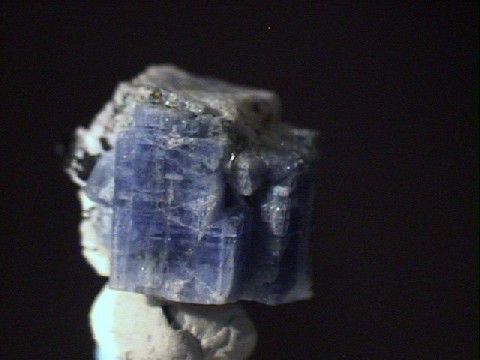
CARLETONITE specimen crl-2
$ 28.00
$ 28.00
Dims: 0.5 x 0.4 x 0.4" (1.3 x 1.0 x 1.0 cm)
Wt: 2 g
Mount Saint-Hilaire, Quebec, Canada
This thumbnail piece appears to consist of a single, complete Carletonite crystal that is in excellent condition. Its luster ranges from waxy to pearly and its color varies from deep blue to pale blue to white, partially due to its pleochroism. Its tetragonal prismatic form is somewhat warped and is capped with a flat termination. A few tiny bits of aegirine are present, but no host rock. The piece is affixed inside a plastic specimen box with a removable putty.
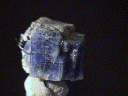
crl-2 ($ 28.00)
Mount Saint-Hilaire, Quebec, Canada

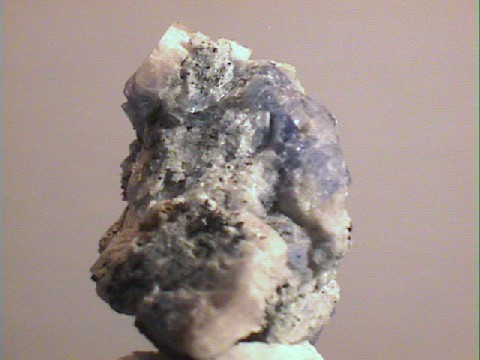
CARLETONITE specimen crl-1
$ 28.00
$ 28.00
Dims: 0.5 x 0.4 x 0.4" (1.3 x 1.0 x 1.0 cm)
Wt: 2 g
Mount Saint-Hilaire, Quebec, Canada
This thumbnail piece appears to consist of a single, complete Carletonite crystal that is in excellent condition. Its luster ranges from waxy to pearly and its color varies from deep blue to pale blue to white, partially due to its pleochroism. Its tetragonal prismatic form is somewhat warped and is capped with a flat termination. A few tiny bits of aegirine are present, but no host rock. The piece is affixed inside a plastic specimen box with a removable putty.

crl-1 ($ 28.00)
Mount Saint-Hilaire, Quebec, Canada
CARLETONITE specimen crl-3
$ 27.00
$ 27.00
Dims: 0.9 x 0.7 x 0.5" (2.2 x 1.7 x 1.2 cm)
Wt: 3 g
Mount Saint-Hilaire, Quebec, Canada
Several partial and complete Carletonite crystals rest on the gray-white base of this thumbnail. These crystals do not exceed 0.2" (6 mm) in diameter and appear to be in good condition, though some are obviously fractured or cleaved. They are either pale pink or blue in color, and a few even show a gradual color change from one to the other. Their tetragonal prismatic form is quite good, and their luster is pearly. All are essentially translucent and internally fractured, though the largest pink crystal is nearly opaque. The piece is affixed inside a plastic thumbnail box with removable putty.
crl-3 ($ 27.00)
Mount Saint-Hilaire, Quebec, Canada
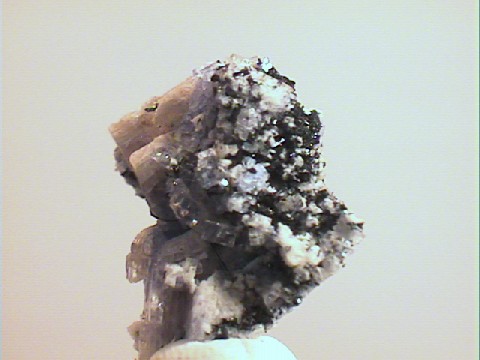
CARLETONITE specimen crl-4
$ 28.00
$ 28.00
Dims: 0.7 x 0.5 x 0.5" (1.8 x 1.4 x 1.3 cm)
Wt: 3 g
Mount Saint-Hilaire, Quebec, Canada
A few broken Carletonite crystals make up most of the mass of this small thumbnail piece. These crystals are only in fair condition and measure less than 0.5" (1.3 cm) along their longest edges. All have good but incomplete tetragonal form and have a color that ranges from colorless to a moderately pale blue. Their luster is pearly and they are transparent but only dimly clear due to internal fracturing. A cluster of tiny aegirine crystals accompanies them, and the piece is attached inside a plastic specimen box with an easily removable putty.
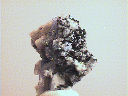
crl-4 ($ 28.00)
Mount Saint-Hilaire, Quebec, Canada
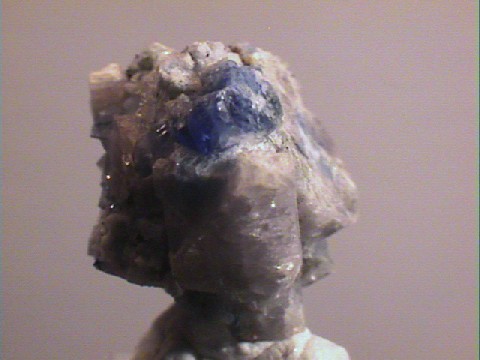
CARLETONITE specimen crl-5
$ 27.00
$ 27.00
Dims: 0.6 x 0.6 x 0.5" (1.6 x 1.5 x 1.4 cm)
Wt: 4 g
Mount Saint-Hilaire, Quebec, Canada
Several incomplete, heavily intergrown Carletonites make up this small thumbnail piece. These crystals are in moderately good condition, being rather broken, and reach nearly 0.6" (1.5 cm) in maximum length. Most show very good tetragonal form, though no terminations are present, and are colorless or pale blue and have pearly to vitreous luster. They are also translucent to transparent, primarily due to concentrated internal cleavage flaws. The piece is easily removed from its specimen box for study.
crl-5 ($ 27.00)
Mount Saint-Hilaire, Quebec, Canada
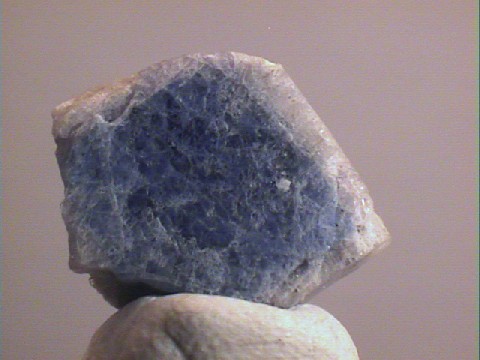
CARLETONITE specimen crl-6
$ 27.00
$ 27.00
Dims: 0.6 x 0.6 x 0.2" (1.5 x 1.4 x 0.6 cm)
Wt: 2 g
Mount Saint-Hilaire, Quebec, Canada
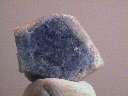
This thumbnail piece consists of a cross-section of a Carletonite crystal. The crystal appears to have been damaged and slightly healed over before this section was taken from it, judging by patterns on the damaged surfaces. It shows evidence of its tetragonal prismatic form and obvious basal cleavage. The cross-section has a moderately pale blue core surrounded by a white outer layer, both of which are dimly translucent due to internal flaws. Luster ranges from vitreous to pearly. There is no host rock present, and the piece is easily removed from its thumbnail box.
crl-6 ($ 27.00)
Mount Saint-Hilaire, Quebec, Canada
CARLETONITE specimen crl-7
$ 25.00
$ 25.00
Dims: 0.8 x 0.7 x 0.5" (2.1 x 1.8 x 1.3 cm)
Wt: 3 g
Mount Saint-Hilaire, Quebec, Canada
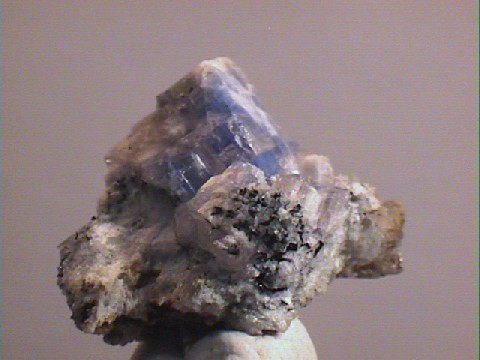
Several cloven, incomplete Carletonite pieces make up this thumbnail specimen. They are in fair to moderately good condition due to breakage, and do not exceed 0.4" (1 cm) in length or diameter. Where discernable, their tetragonal form is good. All have color ranging from pale blue to colorless and luster ranging from pearly to vitreous, and are transparent and only moderately clear at best. A host rock of what appears to be a feldspar sprinkled with tiny aegirines is attached. The piece is affixed in its thumbnail box with a removable putty.
crl-7 ($ 25.00)
Mount Saint-Hilaire, Quebec, Canada
CARLETONITE specimen crl-8
$ 25.00
$ 25.00
Dims: 0.6 x 0.6 x 0.5" (1.4 x 1.4 x 1.3 cm)
Wt: 11 g w/ specimen box
Mount Saint-Hilaire, Quebec, Canada
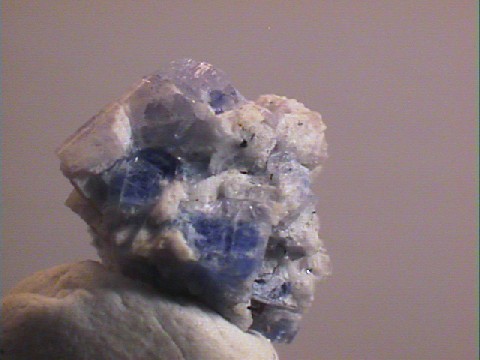
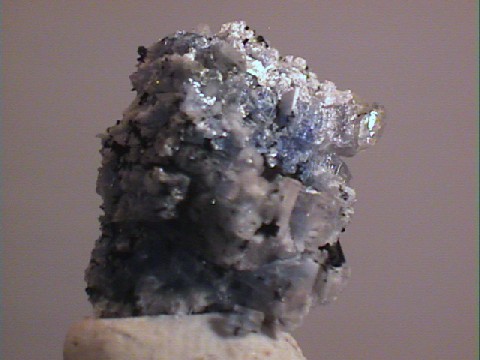
This thumbnail consists of several broken, incomplete and heavily intergrown Carletonite crystals. Their tetragonal prismatic form is easily seen, however, and all have the standard vitreous luster on their undamaged surfaces- cleaved surfaces show a pearly luster. Their color ranges from pale blue to colorless and white, and all are translucent and heavily internally flawed. The piece is brittle, so I advise care in removal from its thumbnail box.
crl-8 ($ 25.00)
Mount Saint-Hilaire, Quebec, Canada
CARLETONITE specimen crl-9
$ 26.00
$ 26.00
Dims: 0.6 x 0.4 x 0.4" (1.6 x 1.1 x 1.0 cm)
Wt: 10 g w/ specimen box
Mount Saint-Hilaire, Quebec, Canada
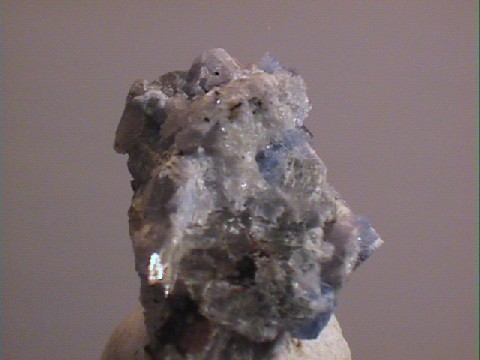
This thumbnail piece seems to be close to a complete Carletonite crystal. Where flat, natural faces are not visible, small crystalline projections- either small crystals or extensions of the crystal itself- cover the surfaces. A small amount of cleavage damage is visible in one spot, showing both blue and milky-white colors and a pearly luster- the few natural surfaces are vitreous. There is no host rock, but many tiny aegirines are scattered about. The piece is affixed inside its thumbnail box with a removable putty.
crl-9 ($ 26.00)
Mount Saint-Hilaire, Quebec, Canada
CARLETONITE specimen crl-10
$ 25.00
$ 25.00
Dims: 0.6 x 0.5 x 0.4" (1.6 x 1.2 x 0.9 cm)
Wt: 10 g w/ specimen box
Mount Saint-Hilaire, Quebec, Canada
This thumbnail specimen consists of an aggregate of intergrown, broken Carletonite crystals. These crystals do not exceed 0.3" (8 mm) along any axis and are all incomplete due to cleavage. Their color and luster respectively range from white to colorless and from vitreous to pearly, and most are translucent, though a few show some transparence. It is affixed inside a plastic thumbnail box with a removable putty.
crl-10 ($ 25.00)
Mount Saint-Hilaire, Quebec, Canada
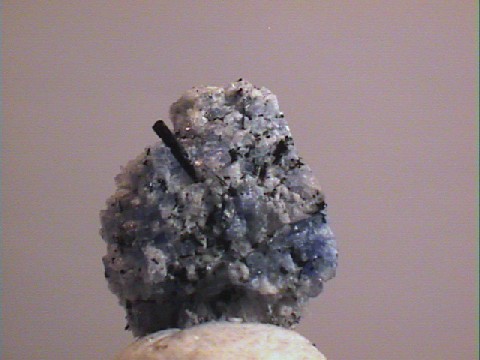
CARLETONITE specimen crl-11
$ 25.00
$ 25.00
Dims: 0.4 x 0.4 x 0.3" (1.1 x 1.0 x 0.8 cm)
Wt: 10 g w/ specimen box
Mount Saint-Hilaire, Quebec, Canada
A partial Carletonite piece makes up this specimen. Its cleavage surfaces appear to be partly healed, but it shows little evidence of its tetragonal form. Its color varies from pale blue to milky white and its luster ranges from vitreous to pearly. Several tiny aegirine needles are scattered about its surface. The piece is easily removed from its thumbnail box.
crl-11 ($ 25.00)
Mount Saint-Hilaire, Quebec, Canada
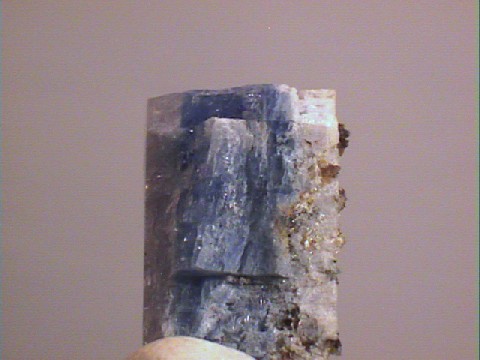
CARLETONITE specimen crl-12
$ 27.00
$ 27.00
Dims: 0.5 x 0.4 x 0.3" (1.3 x 1.0 x 0.8 cm)
Wt: 10 g w/ specimen box
Mount Saint-Hilaire, Quebec, Canada
Another partial Carletonite crystal, this piece shows some tetragonal form and the standard blue core with white outer layer. Damage and cleavage surfaces show a pearly luster, and natural faces are vitreous. The piece is dimly translucent and easily removed from its specimen box.
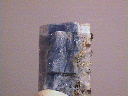
crl-12 ($ 27.00)
Mount Saint-Hilaire, Quebec, Canada
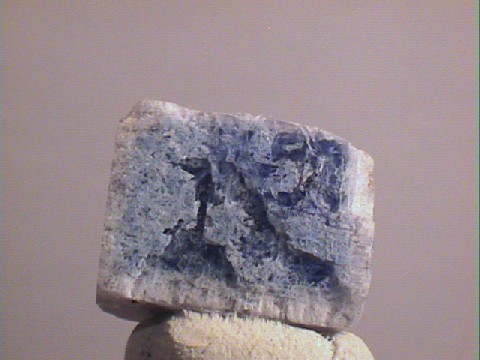
CARLETONITE specimen crl-13
$ 28.00
$ 28.00
Dims: 0.6 x 0.4 x 0.3" (1.5 x 1.0 x 0.7 cm)
Wt: 12 g w/ specimen box
Mount Saint-Hilaire, Quebec, Canada
This partial Carletonite crystal shows evidence of good tetragonal prismatic form. Its color varies between pale blue and white and its luster ranges from pearly to vitreous. Thumbnail box is included.
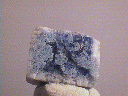
crl-13 ($ 28.00)
Mount Saint-Hilaire, Quebec, Canada
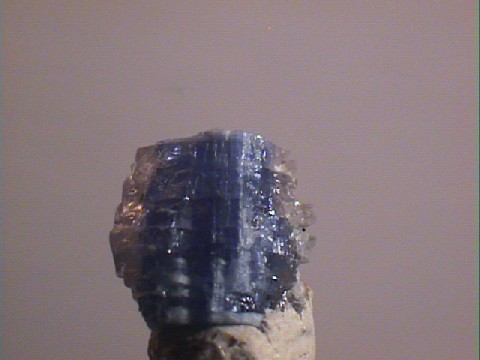
CARLETONITE specimen crl-14
$ 27.00
$ 27.00
Dims: 0.4 x 0.3 x 0.2" (9 x 7 x 6 mm)
Wt: 9 g w/ specimen box
Mount Saint-Hilaire, Quebec, Canada
Though quite small, this section of a Carletonite crystal is one of the clearest that I have seen. It shows good but incomplete tetragonal form and has a dark blue 'core' surrounded by a colorless outer layer. Its luster is generally vitreous, and it is transparent and dimly to moderately clear due to intense internal cleavage and fracture flaws. It is affixed in a plastic thumbnail box with a removable putty.
crl-14 ($ 27.00)
Mount Saint-Hilaire, Quebec, Canada
CARLETONITE specimen crl-15
$ 25.00
$ 25.00
Dims: 0.7 x 0.7 x 0.6" (1.9 x 1.8 x 1.5 cm)
Wt: 13 g w/ specimen box
Mount Saint-Hilaire, Quebec, Canada
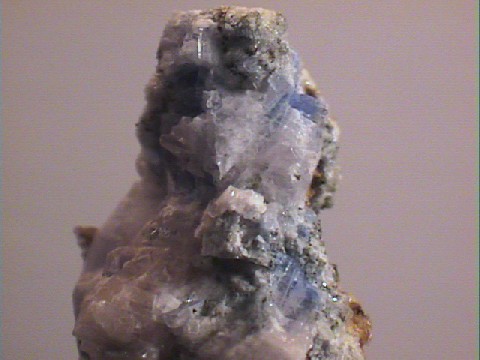
This thumbnail piece consists of an aggregate of several broken, intergrown Carletonites. These do not exceed 0.3" (8 mm) in length or diameter and show some evidence of tetragonal form. They range in color from pale blue to colorless to a very pale pink, and in luster from vitreous to pearly to nearly dull. The piece is affixed inside a plastic thumbnail box with removable putty.
crl-15 ($ 25.00)
Mount Saint-Hilaire, Quebec, Canada
CARLETONITE specimen crl-16
$ 25.00
$ 25.00
Dims: 0.4 x 0.4 x 0.3" (1.1 x 0.9 x 0.7 cm)
Wt: 10 g w/ specimen box
Mount Saint-Hilaire, Quebec, Canada
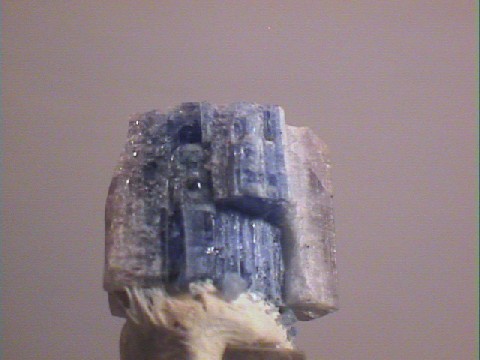
This partial Carletonite crystal shows some evidence of tetragonal form, but is mostly incomplete. It is bicolored, showing zones of deep blue and milky white, and has a luster that ranges from pearly to vitreous. It is translucent, but shows areas of dim transparence. A removable putty holds it inside its thumbnail box.
crl-16 ($ 25.00)
Mount Saint-Hilaire, Quebec, Canada
CARLETONITE specimen crl-17
$ 25.00
$ 25.00
Dims: 0.5 x 0.4 x 0.4" (1.2 x 1.1 x 1.0 cm)
Wt: 11 g w/ specimen box
Mount Saint-Hilaire, Quebec, Canada
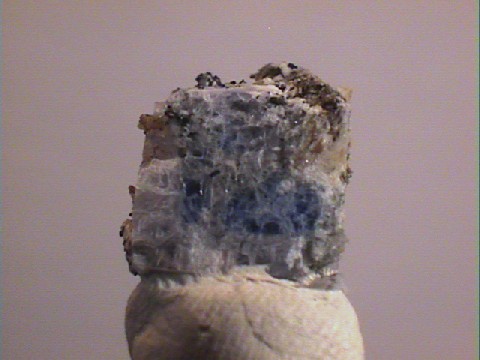
This specimen conists of a cleaved, partial Carletonite crystal. It shows some evidence of tetragonal form and has pale blue and white color zonation. Its luster ranges from vitreous to pearly to nearly dull, and it is essentially opaque. There is no host rock present, and the piece is affixed inside a plastic specimen box.
crl-17 ($ 25.00)
Mount Saint-Hilaire, Quebec, Canada
CARLETONITE specimen crl-18
$ 27.00
$ 27.00
Dims: 0.4 x 0.4 x 0.3" (1.0 x 1.0 x 1.0 cm)
Wt: 1 g
Mount Saint-Hilaire, Quebec, Canada
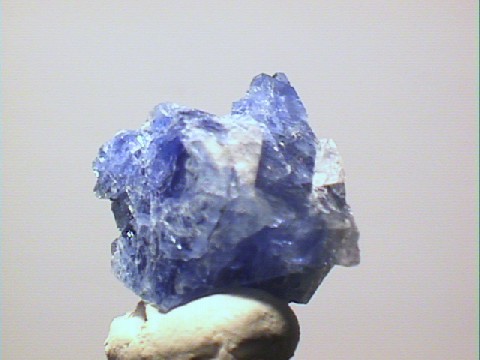
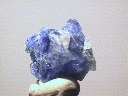
This fractured Carletonite crystal is incomplete and does not have a discernable tetragonal form, but shows at least 3 partial crystal faces. It has the common deep blue color and a pearly luster, and is translucent and heavily internally fractured. There is no base rock present, and the piece is affixed inside a plastic thumbnail box with a removable putty.
crl-18 ($ 27.00)
Mount Saint-Hilaire, Quebec, Canada