 THE MINERAL TINCALCONITE
- Chemistry: Na2B4O7 - 5H2 O, Hydrated Sodium Borate.
- Class: Carbonates
- Subclass: Borates
- Uses: As an ore of boron and as a source of borax (a cleaning agent and useful industrial chemical)
Specimens
The formula of tincalconite can be written as:
Na2B4O5(OH)4
- 3H2
O.
This formula is technically identical to the formula that is generally used for tincalconite, Na2B4O7 - 5H2
O.
The difference is in the number of oxygens, hydroxides and water molecules as shown below:
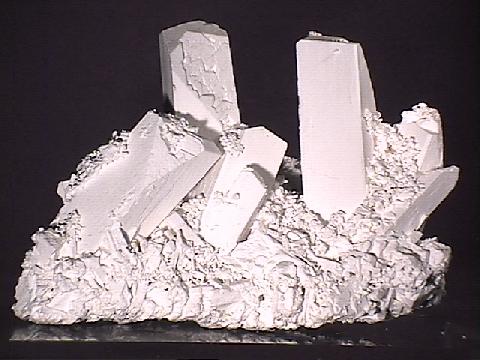
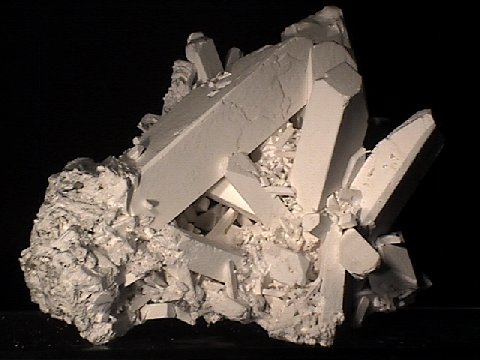
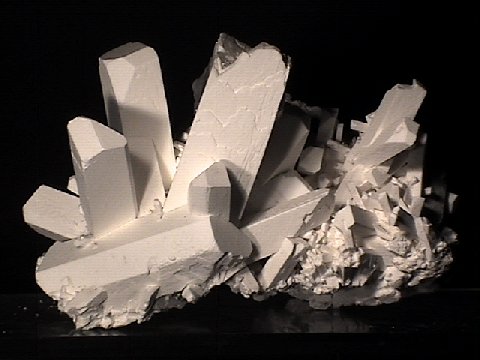
Minerals that are the result of human intervention are sometimes not considered true minerals by mineral purists. Tincalconite, however, is not exclusively an alteration product of borax dehydration after the borax has been excavated, as some texts may lead people to believe. The mineral has been found as a naturally occurring secondary mineral at Searles Lake, California, the mineral's type locality. These specimens of cryptocrystalline aggregates are the result of dehydration of borax crystals that had been exposed to the dry air conditions at the site. In addition though, primary tincalconite crystals have been discovered there in drill cores forming well shaped di-rhombohedral pseudo-octahedral crystals. Primary means that the crystals were not the result of the alteration of other minerals.
PHYSICAL CHARACTERISTICS:
- Color is white.
- Luster is dull to earthy.
- Transparency: Specimens are translucent to dull.
- Crystal System is trigonal.
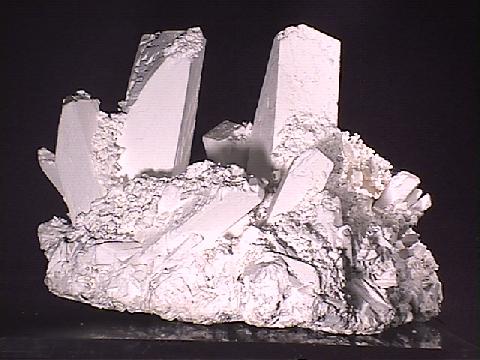
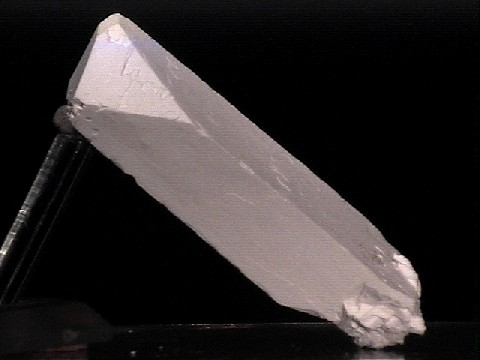
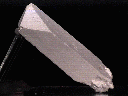
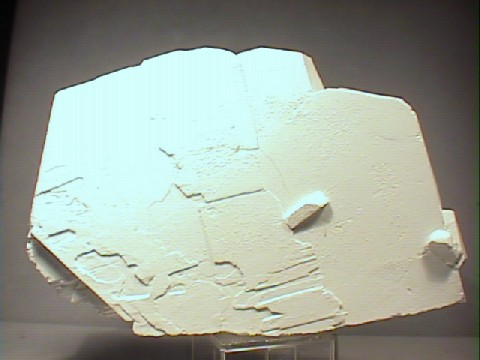
- Crystal Habits include cryptocrystalline aggregates and as crusts. Rare primary, di-rhombohedral, pseudo-octahedral crystals have been found in drill cores from Searles Lake, California. Pseudomorphs of borax are blocky to prismatic crystals with a nearly square cross section.
- Cleavage is not seen.
- Fracture is earthy.
- Hardness is probably about 1.
- Specific Gravity is approximately 1.8 - 1.9 (very light)
- Streak is white.
- Associated Minerals are calcite, halite, hanksite, colemanite, ulexite and other borates especially borax.
- Other Characteristics: A sweet alkaline taste and further dehydration may cause crumbling.
- Notable Occurrences include Trona, Boron, Death Valley; Searles Lake, San Bernardino County and other California localities; arid regions of the Andes Mountains, South America; Turkey and Tibet.
- Best Field Indicators are pseudomorphing habit, color, associations, locality, density and hardness.
 Amethyst Galleries' Mineral Gallery MINERALS |
$ 90.00
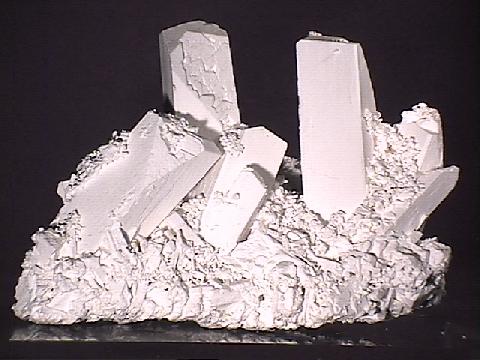
tin-1 ($ 90.00)
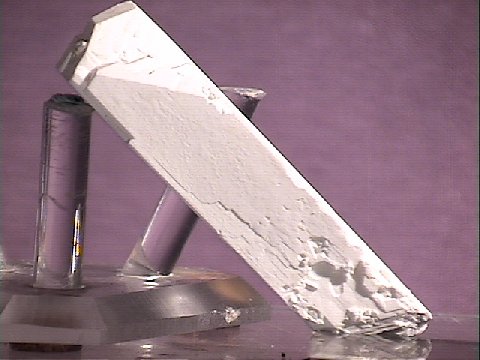
$ 36.00
tin-2 ($ 36.00)
$ 90.00
tin-3 ($ 90.00)
$ 36.00
tin-4 ($ 36.00)
$ 45.00
tin-5 ($ 45.00)