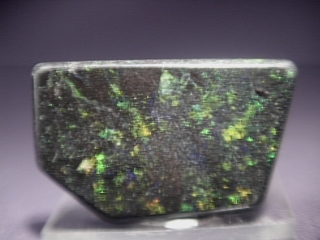
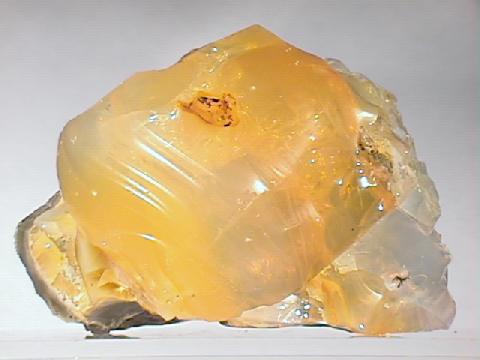
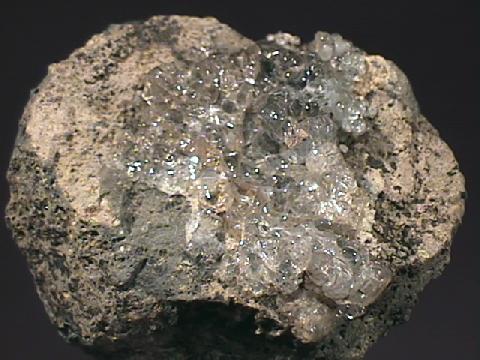
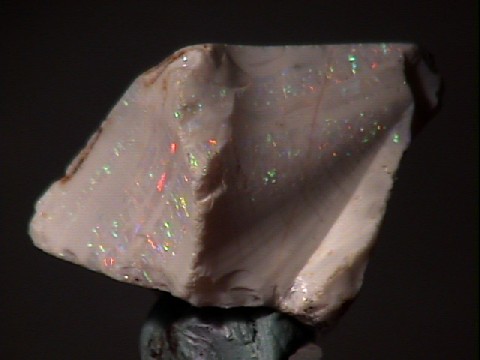
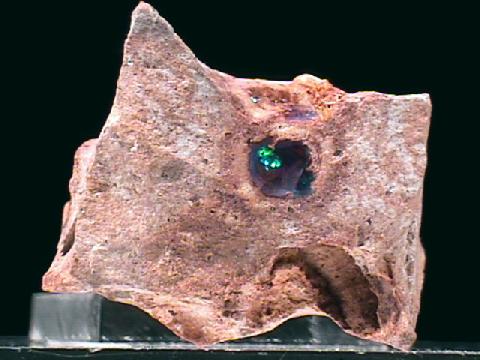
Opal is the modern birthstone for October; an alternate Zodiac stone for Aries, Libra, and Scorpio; and the gemstone gift for the 18th anniversary. Opal has been associated with hope, faith, and confidence. Opal has been a popular gem for many centuries. It has the same chemical formula as quartz with the addition of 5 to 10 percent water. Structurally it consists of tiny spheres with water filling the gaps. These spheres in most Opals are irregular in size and inconsistent in concentration. Yet in Precious Opal, the variety used most often in jewelry, there are many organized pockets of the spheres. These pockets contain spheres of approximately equal size and have a regular concentration, or structure, of the spheres. This has the effect of diffracting light at various wavelengths, creating colors. Each pocket produces a different color, with a different intensity depending on the angle from which a viewer sees it. The multicolored flashes of light that Opal emits gives it a truly beautiful and valuable look, called a play of light. Not all opal is so precious however. Common opal lacks a play of light, color or luster and is (after all) common. Opal is often imitated, forged and "enhanced". While opal is generally white or colorless, it may also be pale yellow, pale red, gray or black when impurities are common. Diffraction can cause flashes of any color of the rainbow (opalescence). Note that the water in opal's structure may be critical for the optimal play of color. Over time, a once beautiful opal may become dull, due to the loss of water. For this reason, opal miners store their "rough" in jars full of water. It may be wise to store valuable opal jewelry the same way! For more information on the mineral opal, see the opal page. For natural opal specimens, see our
|
 Amethyst Galleries' Mineral Gallery MINERALS Natural (Uncut) Gemstone Crystals  Diamond
 Ruby
Ruby Sapphire
 Emerald
 Aquamarine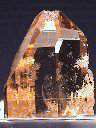
Topaz 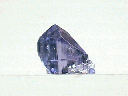 Tanzanite
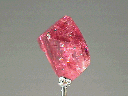 Spinel
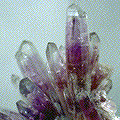 Amethyst
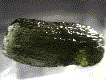 Moldavite
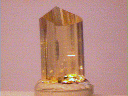 Scapolite
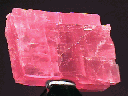 Rhodochrosite
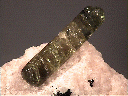 Apatite
Red Beryl  Gold
Gold Silver
 |
Natural (Uncut)
Birthstone Crystals
Jan: Garnet
Feb: Amethyst
Mar: Aquamarine
Apr: Diamond
May: Emerald
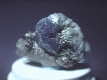
Jun: Alexandrite
Jul: Ruby
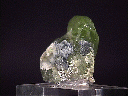
Aug: Peridot
Sep: Sapphire
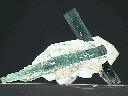
Oct: Opal/Tourmaline
Nov: Topaz
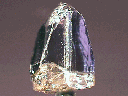
Dec: Tanzanite